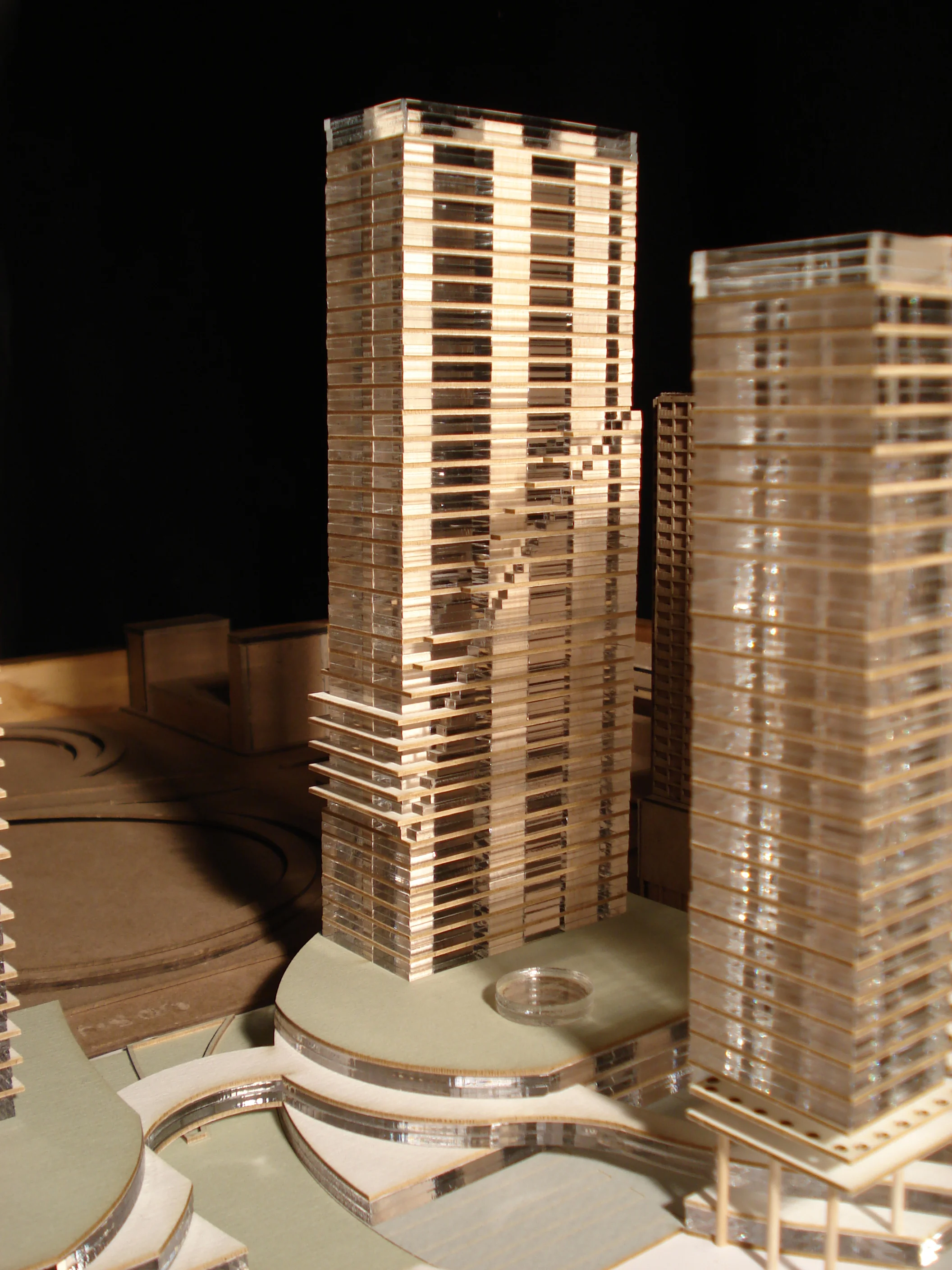
*Nominated for the Chicago Award
Graduate Design Studio - Fall 2011 Semester
Two-person Team Project
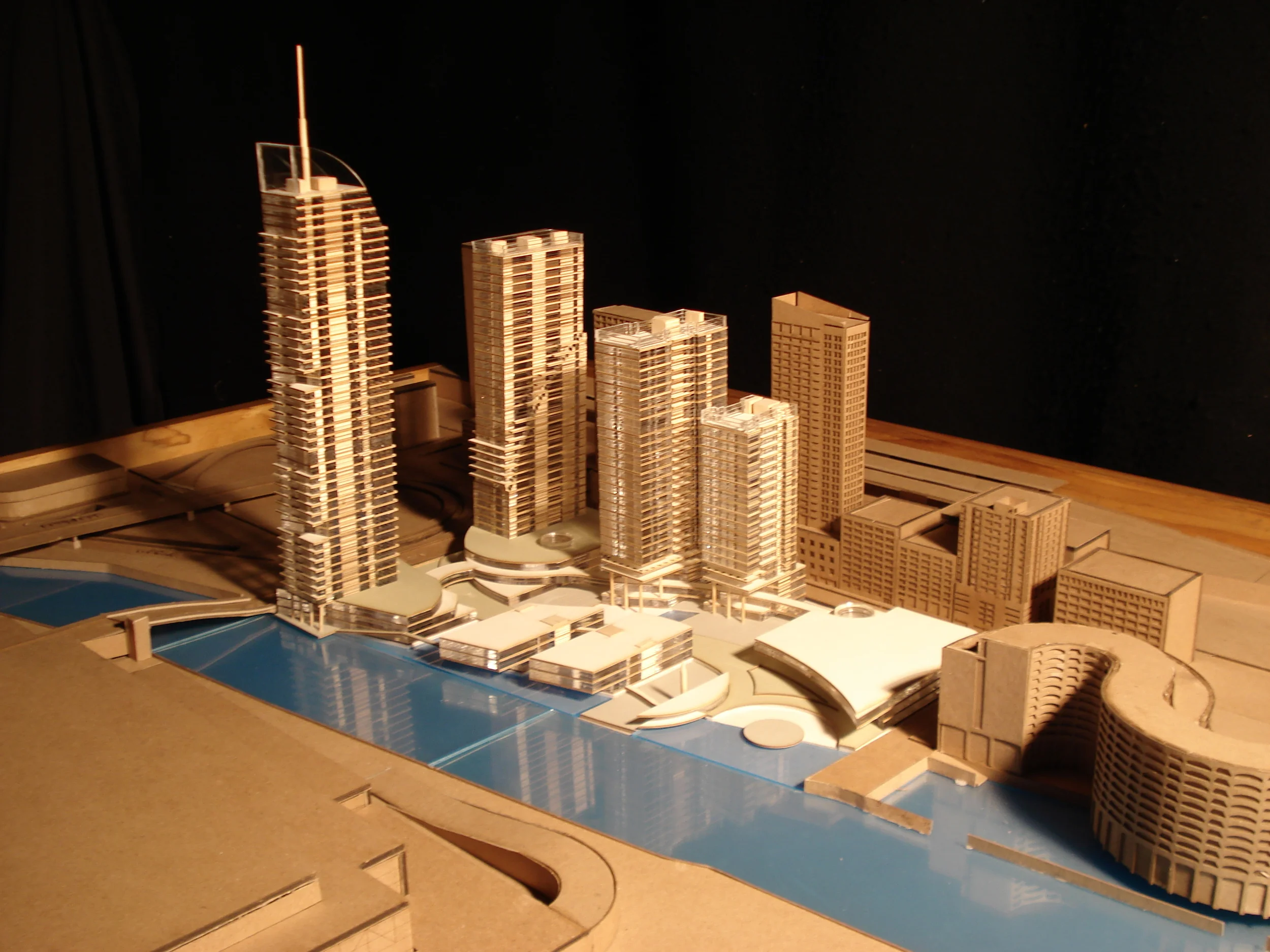
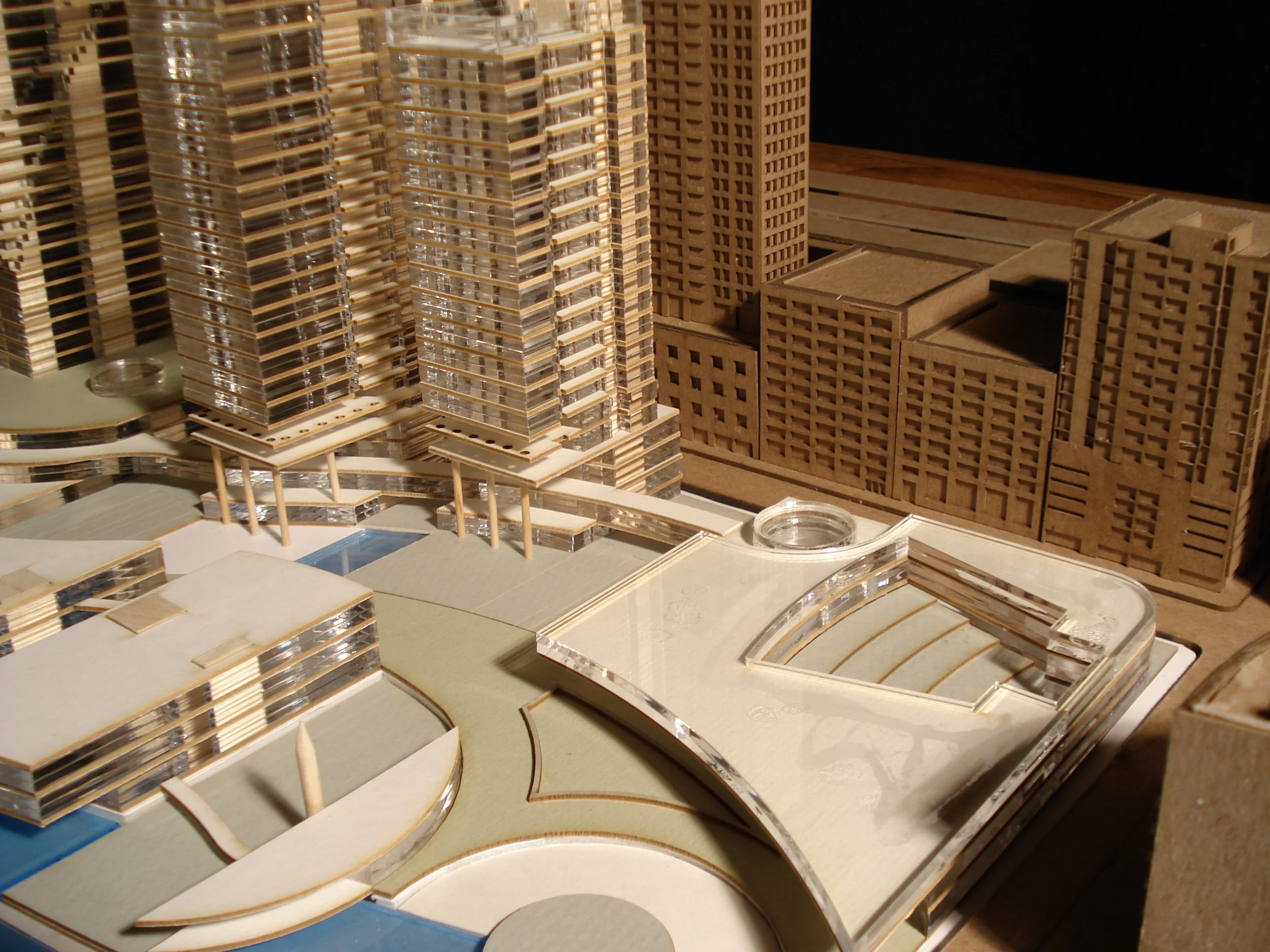
Media: Sketchup, Photoshop, Illustrator, ink, marker, colored pencil, chipboard, plexiglass, basswood
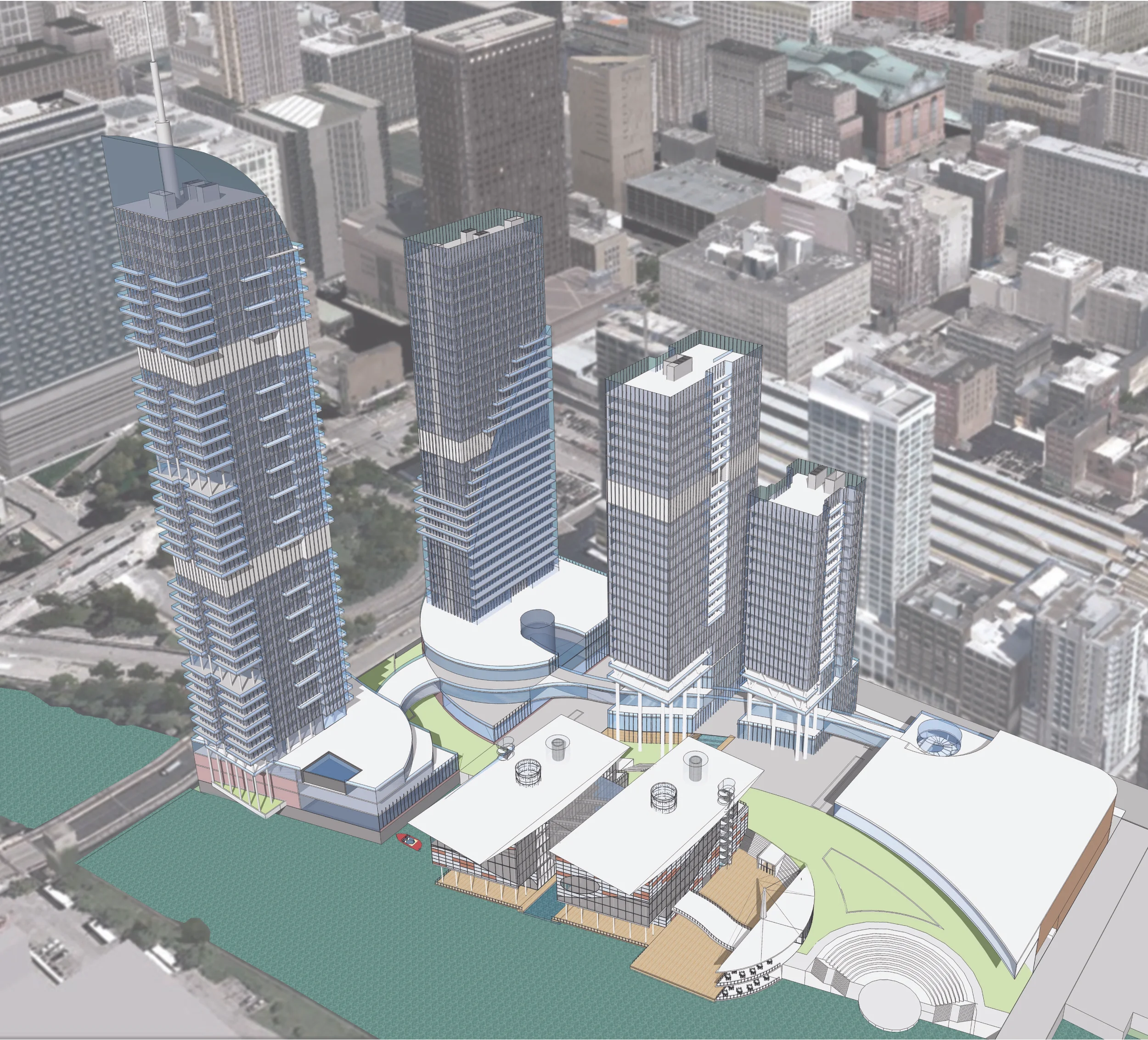
Program: The graduate design studio involved of a two-person team project conducted in two phases. The first phase called for the design of a large, mixed-use urban complex in Chicago, just south of the loop and Congress Parkway adjacent to the Chicago river. The program includes high-rise condominiums and rental apartments, offices, public functions, commercial spaces, entertainment, recreational facilities, a shopping arcade, and a full-fledged cultural (performing) arts center for 1,000 spectators. The second phase required the designs of a contemporary urban art museum/gallery of approximately 40,000 to 45,000 sq. ft.
Site Parameters: Chicago, Illinois. A two city-block size site bounded by the Chicago River, Harrison Street, and S. Wells Street, extending to S. Polk Street to the south. The site is currently empty. Its size is: N=536’ E=800’ S=400’ W=840’
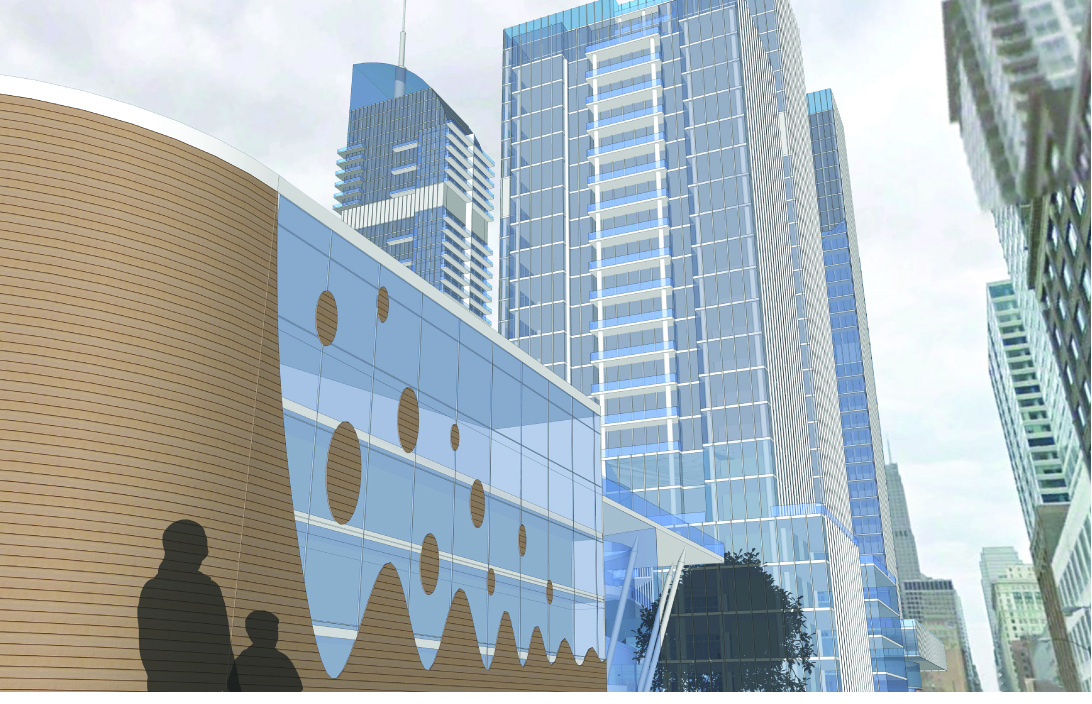
Part I. Waterfront Vista - Urban Scheme: The first half of the semester focused on the overall site design, which tailors to Chicago’s world-famous lakefront system and green-roof initiative. Green roofs, reflection pools, and balconies are integrated throughout, with a large outdoor educational space for children located on the base of the Office tower. An organic pathway breaks up the grid-like orientation in plan, running from Harrison Street down to the River City apartment complex to the south. The urban sheme also aesthetically and functionally responds to Chicago’s rich urban fabric. The high-rises are placed strategically in progression from tallest to shortest, both to maximize southern sun exposure during the winter months, and contextually resemble the varying heights of Chicago’s rich skyline.
Part II. Art Gallery: The art gallery consists of two building masses that conform to the overall organic curvature of the site’s urban scheme. These two masses are unified by a large glass atrium that “floats” above the river water feature from beneath. The art gallery creates a space both for the public and for the site’s residences. It also serves as an extension of the educational spaces directly to the east, and features a boat tourist destination on the river. The art gallery’s architectural experience encourages exploration, stimulation of the senses, and a connection with the Chicago river and the local site.
Sustainability: To address environmentally sensitive design practices, rainwater collection is integrated in the building’s two glass cores. Greywater drains from the sloped roofs down through the cores and into a cistern below-grade for sustainable re-use. Solar energy is collected through the glass cores and exterior glazing system.